
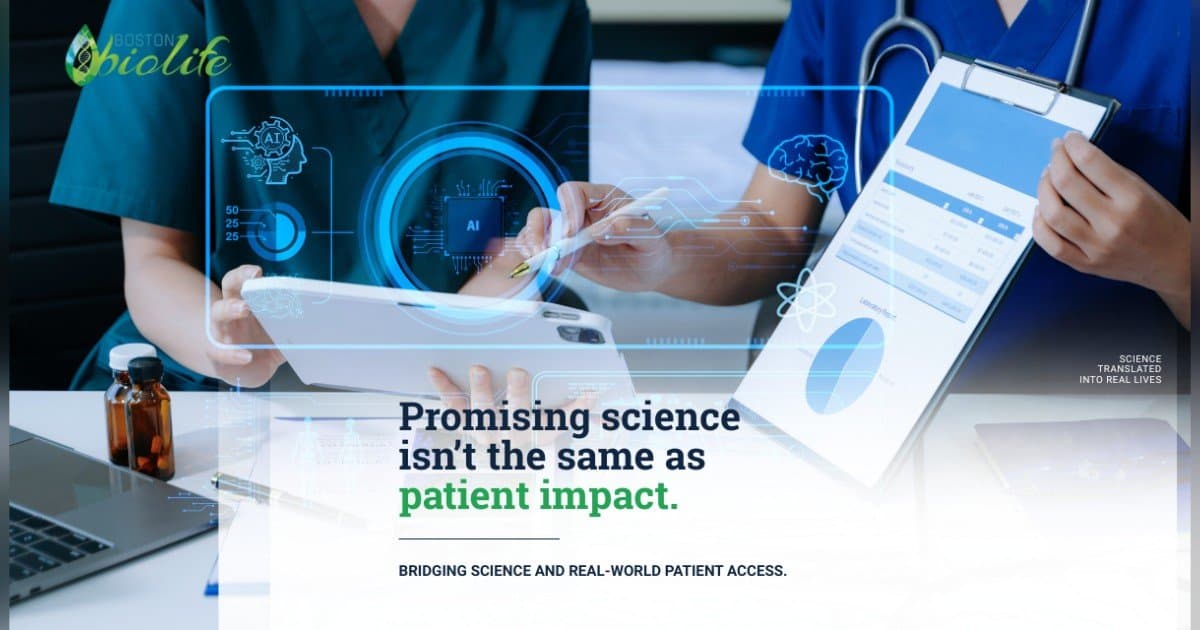
Eleven years after its founding, Boston BioLife is scaling its core mission—bridging the divide between emerging science and clinical medicine—by co-presenting the Translational Longevity Summit. Scheduled for October 7-11, 2026, at Harvard's Enterprise Research Campus in Boston, the event will gather researchers, healthcare professionals, patient advocates, policymakers, technology developers, and investors under one roof. The significance of this move lies in its ambition: to turn a decade of educational groundwork into a broad, cross-sector effort to solve one of longevity medicine's most persistent problems—why promising discoveries so often fail to reach patients.
Founded in July 2015, Boston BioLife has spent its existence helping physicians and scientists understand regenerative and translational medicine. Its founder, Joseph P. Krieger, built the organization after recognizing that clinical adoption of new technologies required far more than a novel device or a compelling study. Healthcare professionals needed to grasp the underlying science, appropriate applications, limitations, regulatory pathways, and patient-safety implications. That insight became the foundation of Boston BioLife's educational programs, which bring together scientific research, clinical education, regulatory awareness, and safety considerations to support informed evaluation of developing medical technologies.
The summit, presented by Boston BioLife and the Healthspan Action Coalition as part of Boston Longevity Week, extends that mission into the fast-moving longevity field. Discussions will cover aging, healthspan, regenerative medicine, personalized care, and the practical challenges of moving discoveries from laboratory settings into responsible real-world use. By convening stakeholders who rarely share a stage—researchers, clinicians, patients, regulators, advocates, and investors—the event aims to create a shared language for evaluating what works, what does not, and what needs further study.
Patient participation is a deliberate priority. People living with illness and age-related conditions bring essential perspectives on urgency, daily function, treatment burden, and unmet needs. Their involvement can help ensure that research, education, and innovation remain tethered to the people medical progress is meant to serve. This emphasis on patient voice is not merely symbolic; it reflects a growing recognition that translation fails when it ignores the lived realities of those it intends to help.
For Krieger, a Massachusetts native whose career unfolded near Boston's medical and academic institutions, holding the summit at Harvard's Enterprise Research Campus carries particular weight. The location embodies the collaborative environment his organization has long advocated. "Translation does not happen within a single laboratory, company or medical practice," Krieger said. "It requires researchers, clinicians, patients, regulators, advocates and responsible industry partners to ask better questions together. That is the community we are bringing together in Boston."
The implications reach beyond a single event. If the summit succeeds in fostering durable partnerships and clearer translational pathways, it could help set a template for how longevity science is evaluated, funded, regulated, and ultimately made accessible. With the field attracting intense investment and public interest, the need for responsible, measurable progress has never been greater. Boston BioLife's 11-year track record suggests it understands that translation is not a moment but a sustained, collective process—one that this summit aims to advance.
